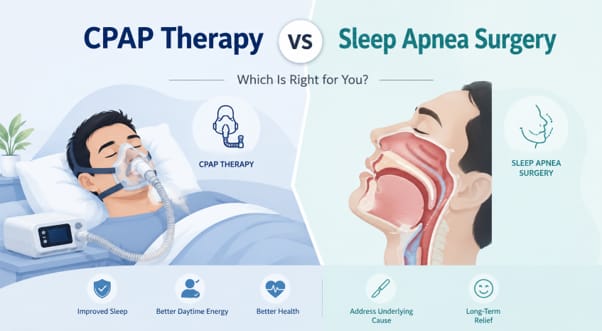
Introduction: Understanding Your Sleep Apnea Treatment Options
Being diagnosed with obstructive sleep apnea can feel overwhelming, especially when you begin exploring treatment options. Many patients are unsure whether they should use Continuous Positive Airway Pressure (CPAP) therapy or consider surgery to address their condition.
Both treatments aim to improve breathing during sleep, reduce symptoms, and lower the health risks associated with untreated sleep apnea. However, they work in very different ways and are suited to different individuals.
The right choice depends on several factors, including the severity of your condition, the structure of your airway, your ability to tolerate treatment, and your personal preferences. Understanding how each option works can help you make a more informed decision together with your ENT specialist.
Understanding the Goals of Sleep Apnea Treatment
Why Treating Sleep Apnea Is Important
Obstructive sleep apnea occurs when the airway repeatedly narrows or becomes blocked during sleep. These interruptions can happen many times throughout the night, affecting sleep quality and oxygen levels.
Over time, untreated sleep apnea may contribute to excessive daytime tiredness, poor concentration, mood changes, and reduced quality of life. It can also place additional strain on the heart and other parts of the body.
Early and appropriate treatment helps improve sleep quality and can reduce many of the symptoms that affect daily activities.
How Treatment Helps Keep the Airway Open
The main goal of a sleep apnea treatment is to prevent the airway from collapsing while you sleep. When the airway remains open, breathing becomes more stable, and sleep becomes more restorative.
Different treatment approaches achieve this goal in different ways. CPAP uses gentle air pressure to keep the airway open, while surgery aims to improve airflow by addressing areas of physical blockage.
What Is CPAP Therapy?
How CPAP Works
CPAP stands for Continuous Positive Airway Pressure. It involves wearing a mask connected to a small machine that delivers a steady flow of air while you sleep.
The air pressure acts as a support for the airway, helping to prevent it from narrowing or collapsing. This allows breathing to remain uninterrupted throughout the night.
Many patients notice improvements in their symptoms soon after starting treatment, particularly when the device is used consistently.
Who Is CPAP Commonly Recommended For?
CPAP is often considered the first-line treatment for many patients with obstructive sleep apnea. It can be effective for mild, moderate, and severe cases.
Patients with moderate to severe sleep apnea frequently benefit from CPAP because it can significantly reduce breathing interruptions during sleep.
An ENT specialist or sleep physician will usually determine whether CPAP is suitable based on sleep study results and individual circumstances.
Benefits of CPAP Therapy
One of the biggest advantages of CPAP is its effectiveness. When used correctly and consistently, it can provide excellent control of sleep apnea symptoms.
CPAP is also a non-surgical treatment. This means patients can avoid the risks, recovery period, and potential complications associated with surgery.
Another benefit is flexibility. Masks, pressure settings, and comfort features can often be adjusted to improve the user experience.
Challenges Some Patients Experience
Although CPAP is highly effective, not everyone finds it easy to use initially. Some patients require time to adjust to wearing a mask during sleep.
Others may experience dryness, minor discomfort, or air leaks. These issues can often be improved with proper mask fitting and adjustments to the equipment.
Long-term success depends heavily on regular use. Patients who stop using CPAP may see their symptoms return.
What Is Sleep Apnea Surgery?
The Purpose of Surgery
Sleep apnea surgery aims to improve airflow by addressing physical areas of obstruction within the airway.
Unlike CPAP, which works only while the device is being used, surgery attempts to create a lasting improvement in airway function.
The exact surgical approach depends on the individual’s anatomy and the location of the blockage.
Common Types of Sleep Apnea Surgery
Nasal Surgery
Some patients have nasal blockages caused by a deviated nasal septum, enlarged turbinates, or other structural issues.
Correcting these problems may improve airflow through the nose and, in some cases, make CPAP therapy easier to tolerate.
Soft Palate and Throat Surgery
The soft palate and surrounding throat tissues can contribute to airway narrowing during sleep.
Certain surgical procedures aim to reshape or reduce excess tissue in this area to improve airflow.
Tongue Base Procedures
In some individuals, the tongue falls backwards during sleep and contributes to airway blockage.
Procedures targeting the tongue base may help reduce this obstruction and improve breathing.
Jaw Advancement Surgery
Jaw advancement surgery repositions the upper and lower jaw to create more space behind the tongue and soft palate.
This procedure is usually reserved for selected patients with specific anatomical features.
Hypoglossal Nerve Stimulation
This treatment involves an implanted device that helps control tongue movement during sleep.
By preventing the tongue from collapsing backwards, the airway can remain more open throughout the night.
Who May Benefit Most From Surgery?
Surgery is often considered when a patient cannot tolerate CPAP despite attempts to improve comfort and compliance.
It may also be appropriate when there is a clear structural cause contributing to airway blockage.
Careful assessment is essential because surgical success depends heavily on selecting the right procedure for the right patient.
CPAP Therapy vs Sleep Apnea Surgery: Key Differences
Treatment Approach
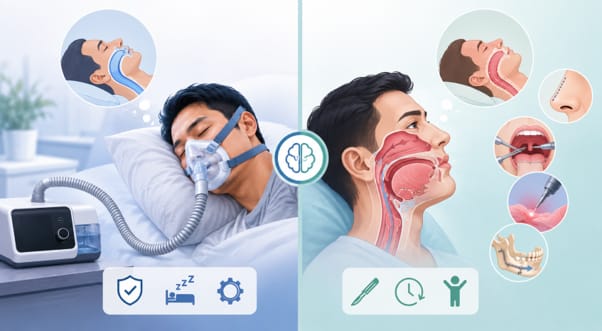
CPAP manages sleep apnea by supporting the airway each night through air pressure.
Surgery aims to modify the airway structure to reduce physical obstruction.
Effectiveness
CPAP remains one of the most effective treatments available when it is used consistently.
Surgical outcomes can also be successful, but results vary depending on the procedure performed and the patient’s anatomy.
Recovery and Adjustment
CPAP does not require a recovery period, although patients often need time to adapt to the equipment.
Surgery involves healing time, which varies according to the type and extent of the procedure.
Long-Term Commitment
CPAP requires ongoing nightly use to maintain its benefits.
Surgery may provide long-term improvement, although some patients may still require additional treatment afterwards.
Risks and Considerations
CPAP carries relatively few medical risks and is generally considered safe.
Surgery, like any medical procedure, involves risks such as discomfort, bleeding, infection, and recovery-related considerations.
Factors That Help Determine the Right Treatment
Severity of Sleep Apnea
The severity of sleep apnea is one of the most important factors when choosing treatment.
Patients with more severe disease often benefit greatly from CPAP because of its proven ability to keep the airway open throughout the night.
Location of Airway Obstruction
Airway obstruction in sleep apnea can occur at one or more levels, including the nose, soft palate, and the area behind the tongue. An ENT assessment helps identify which structures may be narrowing or blocking the airway during sleep, guiding decisions about suitable treatment.
CPAP Tolerance
Some patients adapt well to CPAP and achieve excellent results. Others may continue to struggle despite multiple attempts to improve comfort and compliance, making alternative treatments worth exploring.
Overall Health and Medical History
General health, previous medical conditions, and suitability for surgery all influence treatment recommendations. A personalised approach helps ensure that the chosen treatment is both safe and effective.
Personal Preferences and Lifestyle
Lifestyle considerations also matter. Some individuals prefer a non-surgical solution, while others may prefer a treatment that does not require nightly equipment.
Discussing your goals and expectations with your specialist can help guide the decision-making process.
When CPAP May Be the Better Choice
Patients With Moderate to Severe Sleep Apnea
CPAP often provides excellent control of symptoms in patients with moderate to severe obstructive sleep apnea. Its effectiveness is well established when used consistently.
Those Looking for a Non-Surgical Option
Many patients prefer to avoid surgery whenever possible. CPAP provides a non-invasive treatment option that can be adjusted as needed over time.
Patients Comfortable Using CPAP Nightly
For individuals who adapt well to CPAP, long-term treatment can be straightforward and highly effective. Regular use remains the key to achieving the best results.
Individuals Seeking Immediate Symptom Control
CPAP can begin working from the first night of successful use. Many patients notice improvements in sleep quality and daytime alertness relatively quickly.
When Sleep Apnea Surgery May Be Worth Considering
CPAP Is Not Tolerated Despite Optimisation
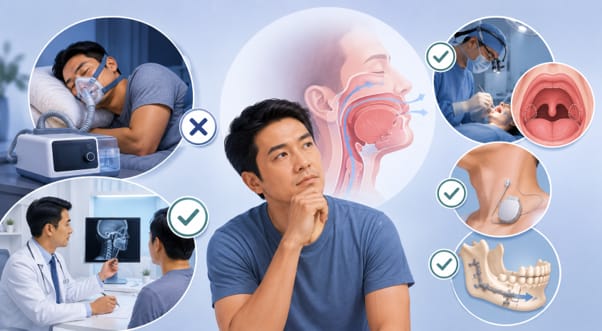
Some patients continue to experience difficulties despite trying different masks, pressure settings, and comfort adjustments.
In these situations, surgery may become a reasonable alternative.
Structural Airway Problems Are Present
When physical airway narrowing is a major contributor to sleep apnea, surgery may help address the underlying cause.
This is why a detailed ENT evaluation is so important.
Persistent Symptoms Despite Treatment
If symptoms continue despite treatment, further investigation may be necessary to determine whether additional interventions could help.
Treatment plans should always be tailored to the individual.
A Long-Term Alternative Is Preferred
Some patients prefer a solution that may reduce their reliance on equipment during sleep.
For carefully selected individuals, surgery may provide meaningful long-term improvement.
Can CPAP and Surgery Be Used Together?
Combined Treatment Approaches
CPAP and surgery are not always mutually exclusive. In some cases, both treatments may play a role.
For example, nasal surgery may improve comfort and make CPAP easier to tolerate. Other procedures may reduce the pressure levels required for effective treatment.
Even after surgery, some patients may continue using CPAP, although often with improved comfort and effectiveness.
Questions to Ask Before Choosing a Treatment
How Severe Is My Sleep Apnea?
Understanding the severity of your condition helps guide treatment recommendations.
What Is Causing My Airway Blockage?
Identifying the exact source of obstruction is essential for selecting the most appropriate treatment.
Am I a Good Candidate for Surgery?
Not every patient is suitable for surgery, which is why specialist evaluation is important.
What Results Can I Realistically Expect?
Having realistic expectations helps patients make informed treatment decisions.
What Are the Risks and Recovery Requirements?
Understanding potential risks and recovery timelines allows you to prepare appropriately.
The Importance of an ENT Assessment
Why Airway Evaluation Matters
Every patient with sleep apnea is different. The structure of the airway, the severity of symptoms, and individual treatment goals all influence management decisions.
A detailed assessment helps identify the most suitable treatment pathway.
What an ENT Specialist Looks For
An ENT specialist evaluates the nose, throat, tongue, and other airway structures that may contribute to sleep apnea.
This assessment helps determine whether CPAP, surgery, or a combination of treatments is likely to provide the best outcome.
Conclusion
Choosing the Right Treatment for Long-Term Sleep Health
There is no single treatment that is right for everyone with obstructive sleep apnea. Both CPAP therapy and sleep apnea surgery have important roles and can be highly effective when matched to the right patient.
CPAP remains the first treatment choice for many individuals because of its proven effectiveness and non-surgical nature. However, surgery may be an excellent option for selected patients, particularly when structural airway problems are present or CPAP cannot be tolerated.
A comprehensive assessment by an ENT specialist is the best way to determine which treatment approach is most appropriate for your individual needs. With the right treatment plan, better sleep and improved long-term health are achievable goals.