
Introduction: Is Your Sinus Headache Actually a Migraine?
A headache accompanied by pressure around the forehead, eyes, or cheeks is often blamed on the sinuses. This may seem even more likely when the pain comes with a blocked nose, watery eyes, or a feeling of facial fullness.
However, these symptoms do not always mean that the sinuses are causing the headache. Migraine can also produce nasal congestion, a runny nose, watery eyes, and pain across the face.
Telling the difference matters because sinus problems and migraine have different causes and may require different forms of treatment. The location of the pain alone is rarely enough to identify what is happening.
Why Sinus Headaches and Migraines Are Easily Confused

The sinuses are air-filled spaces located behind the forehead, cheeks, and nose. When their lining becomes inflamed, pressure and discomfort may develop in these areas.
Migraine can affect many of the same parts of the face. During an attack, nerve activity may cause pain around the eyes, forehead, nose, upper teeth, or cheeks.
Migraine may also activate nerves that control tearing and nasal secretions. This explains why some people experience watery eyes, a blocked nose, or clear nasal discharge during an attack.
Both conditions may therefore cause:
- Forehead or facial pain
- Pressure around the eyes
- Nasal congestion
- A runny nose
- Watery eyes
- Discomfort that appears to change with the weather
Rather than relying on one symptom, it is more useful to consider the complete pattern, including the type of pain, associated symptoms, and how the episode develops.
What Is a True Sinus-Related Headache?
The term “sinus headache” is commonly used to describe pain or pressure believed to come from the sinuses. Medically, the headache is usually considered sinus-related only when there is convincing evidence of inflammation in the nose and sinuses, known as rhinosinusitis.
Acute rhinosinusitis often develops during or after an upper respiratory infection, such as a cold. The nasal and sinus lining becomes swollen, which can interfere with mucus drainage and create congestion.
A sinus-related headache should generally begin or worsen alongside the sinus condition. It should also improve as the inflammation or infection settles.
Symptoms That Support a Sinus Cause
A sinus problem is more likely when the headache or facial pressure occurs together with several of the following:
- A blocked or heavily congested nose
- Thick yellow or green nasal mucus
- Mucus running down the back of the throat
- A reduced or lost sense of smell
- Facial tenderness or fullness
- Fever during an acute infection
- Tooth or upper jaw discomfort
- Symptoms that started during or shortly after a cold
Facial pressure on its own is less convincing evidence of sinusitis. Similarly, bending forward may make facial discomfort more noticeable, but this sign cannot confirm the cause by itself.
Coloured mucus does not automatically mean that an infection is bacterial. Many sinus infections are caused by viruses and improve without antibiotics.
What Is a Migraine?
Migraine is a neurological condition involving changes in the brain’s pain-processing pathways. It is more than an ordinary headache and may affect a person’s ability to work, concentrate, or carry out normal activities.
The pain is often described as throbbing or pulsating, although it may also feel like pressure or a steady ache. Migraine can affect one side of the head, both sides, or mainly the forehead and face.
An untreated migraine attack commonly lasts several hours and may continue for up to a few days. The pattern varies between individuals and may also change over time.
Common Features of Migraine
Symptoms that make migraine more likely include:
- Moderate or severe head pain
- Pain that worsens with walking, climbing stairs, or other normal movement
- Nausea or vomiting
- Sensitivity to bright light
- Sensitivity to noise
- Sensitivity to strong smells
- A need to rest in a quiet, dark room
- Recurring attacks with a similar pattern
- Fatigue or difficulty concentrating before or after the headache
Some people experience migraine aura. This may include flashing lights, zigzag lines, blind spots, tingling, or temporary difficulty finding words.
Aura is not present in most migraine attacks and is not required for a migraine diagnosis.
Sinus Headache vs Migraine: The Main Differences
Although the symptoms overlap, several clues may help separate a sinus-related headache from migraine.
The Underlying Problem
A sinus-related headache occurs alongside active inflammation or infection affecting the nose and sinuses. There should be other nasal symptoms, and the headache should change as the sinus condition improves or worsens.
Migraine is caused by a neurological process. Attacks may be associated with stress, irregular sleep, missed meals, dehydration, hormonal changes, weather changes, or sensory triggers, although a clear trigger is not always found.
The Nasal Symptoms
Sinusitis commonly causes marked congestion, reduced smell and thick nasal discharge. There may also be postnasal drip, fever, or symptoms of a recent respiratory infection.
Migraine may cause a blocked or runny nose, but the discharge is more likely to be clear and watery. Watery eyes or mild facial swelling may also occur because of the nerves activated during an attack.
The Nature of the Pain
Sinus-related discomfort is often described as pressure, fullness, or aching around the cheeks, forehead, and eyes. It usually appears alongside the nasal symptoms.
Migraine pain is often throbbing and may become worse with routine movement. However, not every migraine is one-sided or pulsating, so the description of the pain should not be considered in isolation.
Other Symptoms
Nausea and sensitivity to light, noise, or smells strongly suggest migraine. These symptoms are not typical features of an uncomplicated sinus infection.
Fever, reduced smell, and thick nasal mucus are more supportive of rhinosinusitis. Even so, an examination may be needed when symptoms do not follow a clear pattern.
Questions to Ask During an Attack
Keeping track of what happens before, during, and after each headache can help a doctor understand the likely cause.
Consider recording:
- Where the pain starts and whether it spreads
- Whether it throbs, aches or feels like pressure
- How long the episode lasts
- Whether movement makes it worse
- Whether there is nausea or vomiting
- Whether light, noise or smells become uncomfortable
- The colour and thickness of any nasal mucus
- Whether smell is reduced
- Whether the symptoms followed a cold
- Which medicines were taken and whether they helped
A headache diary can reveal patterns that are difficult to remember during a consultation. It does not replace a medical assessment, but it may make the discussion more useful.
Why Migraine Is Often Mistaken for a Sinus Problem
The location of migraine pain is one reason for the confusion. Pain around the nose, eyes, or cheeks naturally feels as though it must be coming from the sinuses.
Nasal congestion and watery eyes add to this impression. Weather changes may also trigger migraine in some people, leading them to describe the episode as “sinus pressure”.
Allergies can complicate the picture further. Allergic rhinitis may cause sneezing, an itchy nose, clear discharge, and congestion, while migraine may occur at the same time.
Repeated facial headaches without fever, thick mucus, reduced smell, or another clear sign of sinus inflammation should not automatically be treated as sinusitis. A medical assessment may help clarify whether the symptoms are more consistent with migraine, nasal disease, or another cause.
How a Doctor Finds the Cause
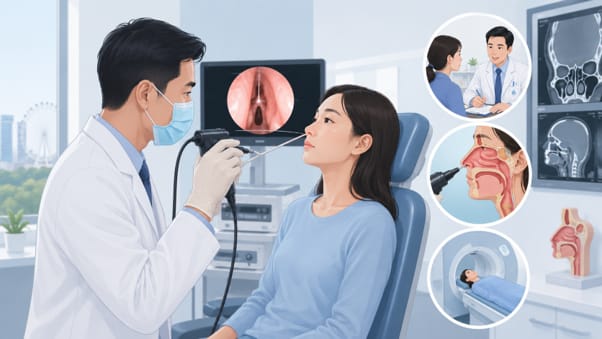
The assessment usually begins with a detailed review of the symptoms. The doctor may ask about the timing of the headache, nasal discharge, sensitivity to light or sound, nausea, recent infections, and previous episodes.
The nose, throat, eyes, and face may also be examined. When persistent or recurring sinus disease is suspected, an ENT specialist may use nasal endoscopy, which involves examining the nasal passages with a narrow camera after a numbing spray is applied.
A CT scan is not needed for every headache. It may be considered when sinus symptoms are persistent, complications are suspected, or the diagnosis remains unclear.
Scan findings must also be interpreted carefully. Mild sinus changes may be found in people who do not have sinus-related pain, so an abnormal scan does not automatically prove that the sinuses caused the headache.
People with ongoing congestion, reduced smell or recurring facial pressure may be referred to a sinus specialist in Singapore for an assessment of the nasal passages and sinuses, particularly when the cause remains uncertain.
When the symptom pattern strongly suggests migraine, care may involve a GP, neurologist, or doctor with experience in managing headache disorders.
Why the Correct Diagnosis Affects Treatment
Treatment should address the underlying condition rather than the location of the pain alone.
For rhinosinusitis, management may include suitable pain relief, saline nasal rinses and medication to reduce nasal inflammation. The appropriate approach depends on the cause, duration and severity of the symptoms.
Antibiotics are not required for every sinus infection. They do not treat viruses and should generally be used only when a healthcare professional believes a bacterial infection is likely.
Migraine management may include pain-relieving medicine, medication for nausea, or migraine-specific treatment. People with frequent or disabling attacks may also be considered for preventive treatment.
Regular meals, sufficient sleep, hydration, and identifying personal triggers may support migraine management. Treatment should be discussed with a doctor or pharmacist because not every medicine is suitable for every person.
Frequent use of pain-relieving medication can sometimes make headaches more frequent. Anyone relying on headache medicine regularly should seek advice rather than continuing to increase its use.
When Should You Seek Medical Advice?
Arrange a medical review when headaches:
- Keep returning or are becoming more frequent
- Affect work, sleep or normal daily activities
- Change in pattern or severity
- Occur with persistent nasal blockage or reduced smell
- Continue despite appropriate self-care
- Require frequent pain-relieving medicine
- Repeatedly occur without clear signs of a sinus infection
Seek urgent medical attention for a sudden, extremely severe headache, particularly when the pain reaches maximum intensity quickly.
Urgent assessment is also important when a headache occurs with confusion, fainting, seizures, weakness, numbness, difficulty speaking, double vision, a stiff neck, or a high fever. Rapidly worsening facial or eye swelling, breathing difficulty, significant bleeding, sudden hearing loss, or symptoms following a head injury should also be assessed promptly.
These signs do not necessarily mean that a serious condition is present, but they should not be treated as an ordinary sinus headache or migraine without medical advice.
Conclusion: Look Beyond the Location of the Pain
Facial pressure, congestion and watery eyes can occur with both sinus problems and migraine. The most useful clues come from the wider symptom pattern rather than the location of the pain alone.
Thick nasal discharge, reduced smell, fever and symptoms that develop alongside an infection support a sinus cause. Nausea, sensitivity to light or noise, movement-related worsening and recurring attacks point more strongly towards migraine.
Because symptoms can overlap, persistent or uncertain headaches deserve a proper assessment. An accurate diagnosis helps ensure that treatment is based on the individual’s symptoms, medical history, and examination rather than an assumption about where the pain is felt.