Persistent Postnasal Drip: Why Does Mucus Keep Running Down the Throat?

Introduction: Understanding Persistent Postnasal Drip
Do you frequently clear your throat because it feels as though mucus is constantly running down from your nose? This uncomfortable sensation, known as postnasal drip, can leave you coughing, swallowing repeatedly, or feeling that something is stuck at the back of your throat.
Although occasional mucus drainage is normal, persistent postnasal drip may indicate ongoing nasal irritation, allergies, or sinus inflammation. Understanding what causes the problem is important because different underlying conditions may require different approaches to treatment.
What Is Postnasal Drip?
The nose and sinuses naturally produce mucus to keep their surfaces moist and help trap dust, germs, and other particles. Under normal circumstances, this mucus moves towards the back of the throat and is swallowed without being noticed.
Postnasal drip occurs when this drainage becomes particularly noticeable, often because of increased mucus production, changes in mucus thickness, or irritation within the nasal passages.
Some people experience a constant dripping sensation, while others notice thick mucus collecting in their throat. Postnasal drip is not a disease itself but a symptom that can develop for several reasons.
What Causes Persistent Postnasal Drip?
When mucus repeatedly runs down the throat, an ongoing problem affecting the nose or sinuses may be responsible. Several conditions can contribute to persistent symptoms.
Allergic Rhinitis
Allergic rhinitis develops when the immune system reacts to substances such as house dust mites, pet dander, or mould. These allergens can cause inflammation inside the nose, resulting in increased mucus production.
House dust mites are particularly relevant in Singapore, where the warm, humid environment supports their presence. People with allergic rhinitis may also experience sneezing, an itchy nose, watery discharge, and nasal congestion.
Non-Allergic Nasal Irritation
Not all nasal irritation involves an allergic reaction. Some people have sensitive nasal passages that respond to cigarette smoke, haze, strong fragrances or sudden temperature changes.
Cold or dry air from air-conditioning may also aggravate nasal symptoms in certain individuals. Repeated exposure to these triggers can contribute to ongoing mucus drainage even without a recognised allergy.
Persistent Sinus Inflammation
Sinusitis occurs when the lining of the sinuses becomes inflamed. This inflammation can interfere with normal mucus drainage, sometimes causing secretions to collect or move towards the throat.
People with ongoing sinus inflammation may also notice a blocked nose, facial pressure, or reduced sense of smell. However, postnasal drip alone does not mean someone has sinusitis.
Lingering Effects of a Respiratory Infection
After a cold or another respiratory infection, inflammation inside the nasal passages may take time to settle. Mucus drainage can therefore remain noticeable even after the main symptoms have improved.
If symptoms continue without improvement or become progressively worse, further assessment may be appropriate.
Nasal Polyps
Nasal polyps are soft, non-cancerous growths associated with inflammation inside the nose and sinuses. They can contribute to nasal blockage and interfere with mucus drainage.
Larger or multiple polyps may also affect the sense of smell and contribute to persistent nasal symptoms.
What Are the Common Symptoms of Postnasal Drip?
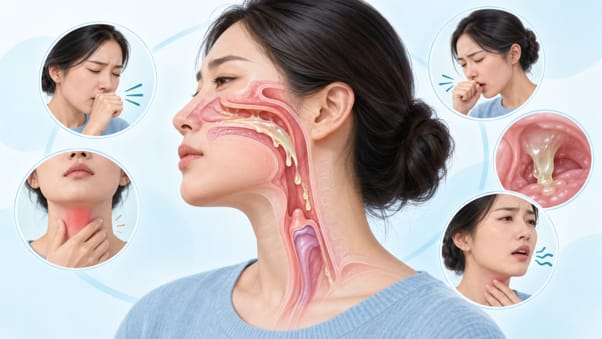
Postnasal drip does not always cause an obvious runny nose. Instead, the discomfort may be concentrated at the back of the throat.
Common symptoms include:
- A persistent sensation of mucus draining into the throat.
- Frequent throat clearing or swallowing.
- A cough that may become more noticeable at night.
- A sore, irritated, or tickling throat.
- Thick or sticky mucus that feels difficult to clear.
- Occasional hoarseness or changes in the voice.
These symptoms can affect sleep, conversation, and everyday comfort. However, they are not exclusive to postnasal drip, so persistent throat problems should not automatically be attributed to nasal mucus.
Why Does the Throat Feel Full of Mucus Without a Runny Nose?
Mucus does not always leave the nose through the nostrils. It can travel backwards into the throat, creating a dripping sensation even when the front of the nose feels relatively dry.
Sometimes, however, the feeling of mucus is caused by throat irritation rather than excessive nasal drainage.
One possible explanation is laryngopharyngeal reflux, sometimes called silent reflux. This occurs when stomach contents flow back towards the throat, potentially causing coughing, hoarseness, frequent throat clearing, or a lump-like sensation.
Not everyone with reflux experiences heartburn. A medical examination may help distinguish genuine postnasal drip from other causes of throat discomfort.
How Can You Relieve Persistent Postnasal Drip?

Managing persistent postnasal drip depends on what is causing the symptoms. While some measures may provide relief, treatment should be tailored to the individual’s condition.
Saline Nasal Sprays and Rinses
Saline solutions can help clear mucus, allergens, and irritants from the nasal passages. They may also make thick secretions easier to remove.
For nasal irrigation, use sterile, distilled, or previously boiled and cooled water. Follow the product instructions carefully and keep rinsing equipment clean.
Managing Allergies and Nasal Inflammation
Reducing exposure to known allergens may help prevent recurring symptoms. Depending on the diagnosis, a healthcare professional may recommend antihistamines or steroid nasal sprays.
Antihistamines can help relieve certain allergy symptoms, while steroid nasal sprays reduce inflammation inside the nose. These medicines work differently and may not be appropriate for every cause of postnasal drip.
Everyday Habits That May Help
Maintaining adequate hydration may prevent mucus from becoming excessively thick. Avoiding cigarette smoke, strong fragrances, and other known irritants may also reduce nasal discomfort.
People who notice worsening symptoms in air-conditioned environments may benefit from addressing excessive dryness or avoiding direct exposure to cold airflow.
Decongestant nasal sprays should not be used continuously beyond their recommended duration, as prolonged use can worsen nasal congestion.
Treating the Underlying Condition
When persistent postnasal drip is associated with sinus inflammation, nasal polyps or another condition, more targeted treatment may be necessary.
Antibiotics are not routinely needed for postnasal drip, and yellow or green mucus alone does not confirm a bacterial infection. Treatment decisions depend on clinical findings rather than mucus colour alone.
When Should You See a Doctor for Persistent Postnasal Drip?
Occasional postnasal drip may improve as temporary irritation or an infection settles. However, symptoms that persist for several weeks, repeatedly return, or interfere with sleep and daily activities deserve medical attention.
An assessment is particularly useful when mucus drainage occurs alongside persistent nasal blockage, facial discomfort, reduced smell, or coughing that does not improve with appropriate initial care.
Certain symptoms warrant earlier attention, including persistent blockage affecting only one side of the nose, repeated bloodstained discharge, difficulty swallowing or an unexplained neck lump.
Seek urgent medical attention for severe breathing difficulty, significant bleeding, swelling around the eyes with vision changes, confusion, or a rapidly worsening severe headache.
How Does an ENT Doctor Diagnose Persistent Postnasal Drip?
An assessment usually begins with questions about how long the symptoms have been present, whether they occur throughout the day, and what makes them better or worse.
The doctor may also ask about allergies, recent infections, environmental exposures, and treatments already tried.
A physical examination can help identify nasal inflammation, mucus accumulation, or other abnormalities. In selected cases, nasal endoscopy may be performed using a small camera to examine the nasal passages more closely.
Allergy testing or imaging may be considered if the findings suggest a particular underlying condition. Not everyone requires these investigations, and the appropriate approach depends on their symptoms and examination results.
Frequently Asked Questions About Persistent Postnasal Drip
Why Does Postnasal Drip Feel Worse at Night?
Lying down and swallowing less frequently during sleep may make mucus accumulation or throat irritation more noticeable. The experience varies depending on the underlying cause.
Can Postnasal Drip Cause a Cough Without a Cold?
Yes. Mucus draining towards the throat may irritate sensitive tissues and trigger coughing, even when there is no active respiratory infection.
Does Yellow or Green Mucus Always Mean a Bacterial Infection?
No. Mucus colour can change during inflammation or viral infections. Colour alone cannot determine whether a bacterial infection is present or antibiotics are needed.
Can Persistent Postnasal Drip Go Away on Its Own?
Postnasal drip caused by temporary irritation or an infection may improve naturally. Persistent allergies or ongoing sinus inflammation, however, may require targeted management.
Is Postnasal Drip Contagious?
Postnasal drip itself is not contagious. However, an underlying viral respiratory infection may spread from person to person.
Conclusion
Persistent postnasal drip can be frustrating, particularly when mucus drainage leads to frequent throat clearing, coughing, or disrupted sleep. Although allergies and nasal inflammation are common explanations, other conditions can produce similar symptoms.
Identifying the underlying cause is essential for choosing appropriate management. If symptoms continue despite initial treatment, a GP can provide an assessment, while someone searching for an ENT specialist in Singapore may be considering further evaluation of persistent nasal or throat problems.
With an appropriate diagnosis and individualised care, many causes of postnasal drip can be managed effectively.