CPAP Therapy vs Sleep Apnea Surgery: Which Is Right for You?
Understanding Your Sleep Apnea Treatment Options

Introduction: Understanding Your Sleep Apnea Treatment Options

Being diagnosed with obstructive sleep apnea can feel overwhelming, especially when you begin exploring treatment options. Many patients are unsure whether they should use Continuous Positive Airway Pressure (CPAP) therapy or consider surgery to address their condition.

Both treatments aim to improve breathing during sleep, reduce symptoms, and lower the health risks associated with untreated sleep apnea. However, they work in very different ways and are suited to different individuals.

The right choice depends on several factors, including the severity of your condition, the structure of your airway, your ability to tolerate treatment, and your personal preferences. Understanding how each option works can help you make a more informed decision together with your ENT specialist.

Understanding the Goals of Sleep Apnea Treatment

Why Treating Sleep Apnea Is Important

Obstructive sleep apnea occurs when the airway repeatedly narrows or becomes blocked during sleep. These interruptions can happen many times throughout the night, affecting sleep quality and oxygen levels.

Over time, untreated sleep apnea may contribute to excessive daytime tiredness, poor concentration, mood changes, and reduced quality of life. It can also place additional strain on the heart and other parts of the body.

Early and appropriate treatment helps improve sleep quality and can reduce many of the symptoms that affect daily activities.

How Treatment Helps Keep the Airway Open

The main goal of a sleep apnea treatment is to prevent the airway from collapsing while you sleep. When the airway remains open, breathing becomes more stable, and sleep becomes more restorative.

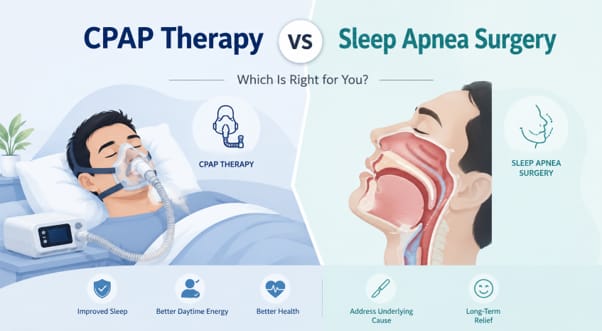
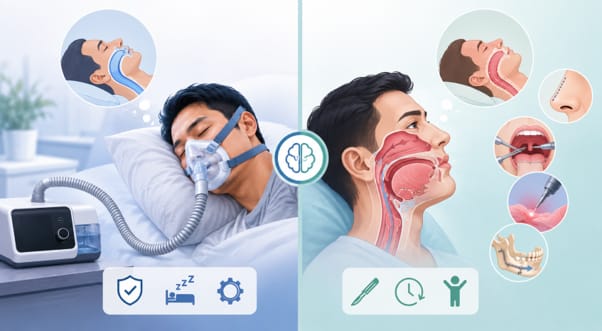
Different treatment approaches achieve this goal in different ways. CPAP uses gentle air pressure to keep the airway open, while surgery aims to improve airflow by addressing areas of physical blockage.

What Is CPAP Therapy?

How CPAP Works

CPAP stands for Continuous Positive Airway Pressure. It involves wearing a mask connected to a small machine that delivers a steady flow of air while you sleep.

The air pressure acts as a support for the airway, helping to prevent it from narrowing or collapsing. This allows breathing to remain uninterrupted throughout the night.

Many patients notice improvements in their symptoms soon after starting treatment, particularly when the device is used consistently.

Who Is CPAP Commonly Recommended For?

CPAP is often considered the first-line treatment for many patients with obstructive sleep apnea. It can be effective for mild, moderate, and severe cases.

Patients with moderate to severe sleep apnea frequently benefit from CPAP because it can significantly reduce breathing interruptions during sleep.

An ENT specialist or sleep physician will usually determine whether CPAP is suitable based on sleep study results and individual circumstances.

Benefits of CPAP Therapy

One of the biggest advantages of CPAP is its effectiveness. When used correctly and consistently, it can provide excellent control of sleep apnea symptoms.

CPAP is also a non-surgical treatment. This means patients can avoid the risks, recovery period, and potential complications associated with surgery.

Another benefit is flexibility. Masks, pressure settings, and comfort features can often be adjusted to improve the user experience.

Challenges Some Patients Experience

Although CPAP is highly effective, not everyone finds it easy to use initially. Some patients require time to adjust to wearing a mask during sleep.

Others may experience dryness, minor discomfort, or air leaks. These issues can often be improved with proper mask fitting and adjustments to the equipment.

Long-term success depends heavily on regular use. Patients who stop using CPAP may see their symptoms return.

What Is Sleep Apnea Surgery?

The Purpose of Surgery

Sleep apnea surgery aims to improve airflow by addressing physical areas of obstruction within the airway.

Unlike CPAP, which works only while the device is being used, surgery attempts to create a lasting improvement in airway function.

The exact surgical approach depends on the individual’s anatomy and the location of the blockage.

Common Types of Sleep Apnea Surgery

Nasal Surgery

Some patients have nasal blockages caused by a deviated nasal septum, enlarged turbinates, or other structural issues.

Correcting these problems may improve airflow through the nose and, in some cases, make CPAP therapy easier to tolerate.

Soft Palate and Throat Surgery

The soft palate and surrounding throat tissues can contribute to airway narrowing during sleep.

Certain surgical procedures aim to reshape or reduce excess tissue in this area to improve airflow.

Tongue Base Procedures

In some individuals, the tongue falls backwards during sleep and contributes to airway blockage.

Procedures targeting the tongue base may help reduce this obstruction and improve breathing.

Jaw Advancement Surgery

Jaw advancement surgery repositions the upper and lower jaw to create more space behind the tongue and soft palate.

This procedure is usually reserved for selected patients with specific anatomical features.

Hypoglossal Nerve Stimulation

This treatment involves an implanted device that helps control tongue movement during sleep.

By preventing the tongue from collapsing backwards, the airway can remain more open throughout the night.

Who May Benefit Most From Surgery?

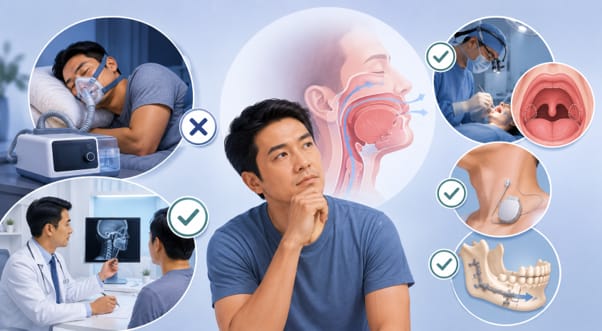
Surgery is often considered when a patient cannot tolerate CPAP despite attempts to improve comfort and compliance.

It may also be appropriate when there is a clear structural cause contributing to airway blockage.

Careful assessment is essential because surgical success depends heavily on selecting the right procedure for the right patient.

CPAP Therapy vs Sleep Apnea Surgery: Key Differences
What Is Sleep Apnea Surgery

Treatment Approach

CPAP manages sleep apnea by supporting the airway each night through air pressure.

Surgery aims to modify the airway structure to reduce physical obstruction.

Effectiveness

CPAP remains one of the most effective treatments available when it is used consistently.

Surgical outcomes can also be successful, but results vary depending on the procedure performed and the patient’s anatomy.

Recovery and Adjustment

CPAP does not require a recovery period, although patients often need time to adapt to the equipment.

Surgery involves healing time, which varies according to the type and extent of the procedure.

Long-Term Commitment

CPAP requires ongoing nightly use to maintain its benefits.

Surgery may provide long-term improvement, although some patients may still require additional treatment afterwards.

Risks and Considerations

CPAP carries relatively few medical risks and is generally considered safe.

Surgery, like any medical procedure, involves risks such as discomfort, bleeding, infection, and recovery-related considerations.

Factors That Help Determine the Right Treatment

Severity of Sleep Apnea

The severity of sleep apnea is one of the most important factors when choosing treatment.

Patients with more severe disease often benefit greatly from CPAP because of its proven ability to keep the airway open throughout the night.

Location of Airway Obstruction

Airway obstruction in sleep apnea can occur at one or more levels, including the nose, soft palate, and the area behind the tongue. An ENT assessment helps identify which structures may be narrowing or blocking the airway during sleep, guiding decisions about suitable treatment.

CPAP Tolerance

Some patients adapt well to CPAP and achieve excellent results. Others may continue to struggle despite multiple attempts to improve comfort and compliance, making alternative treatments worth exploring.

Overall Health and Medical History

General health, previous medical conditions, and suitability for surgery all influence treatment recommendations. A personalised approach helps ensure that the chosen treatment is both safe and effective.

Personal Preferences and Lifestyle

Lifestyle considerations also matter. Some individuals prefer a non-surgical solution, while others may prefer a treatment that does not require nightly equipment.

Discussing your goals and expectations with your specialist can help guide the decision-making process.

When CPAP May Be the Better Choice

Patients With Moderate to Severe Sleep Apnea

CPAP often provides excellent control of symptoms in patients with moderate to severe obstructive sleep apnea. Its effectiveness is well established when used consistently.

Those Looking for a Non-Surgical Option

Many patients prefer to avoid surgery whenever possible. CPAP provides a non-invasive treatment option that can be adjusted as needed over time.

Patients Comfortable Using CPAP Nightly

For individuals who adapt well to CPAP, long-term treatment can be straightforward and highly effective. Regular use remains the key to achieving the best results.

Individuals Seeking Immediate Symptom Control

CPAP can begin working from the first night of successful use. Many patients notice improvements in sleep quality and daytime alertness relatively quickly.

When Sleep Apnea Surgery May Be Worth Considering
When Sleep Apnea Surgery May Be Worth Considering

CPAP Is Not Tolerated Despite Optimisation

Some patients continue to experience difficulties despite trying different masks, pressure settings, and comfort adjustments.

In these situations, surgery may become a reasonable alternative.

Structural Airway Problems Are Present

When physical airway narrowing is a major contributor to sleep apnea, surgery may help address the underlying cause.

This is why a detailed ENT evaluation is so important.

Persistent Symptoms Despite Treatment

If symptoms continue despite treatment, further investigation may be necessary to determine whether additional interventions could help.

Treatment plans should always be tailored to the individual.

A Long-Term Alternative Is Preferred

Some patients prefer a solution that may reduce their reliance on equipment during sleep.

For carefully selected individuals, surgery may provide meaningful long-term improvement.

Can CPAP and Surgery Be Used Together?

Combined Treatment Approaches

CPAP and surgery are not always mutually exclusive. In some cases, both treatments may play a role.

For example, nasal surgery may improve comfort and make CPAP easier to tolerate. Other procedures may reduce the pressure levels required for effective treatment.

Even after surgery, some patients may continue using CPAP, although often with improved comfort and effectiveness.

Questions to Ask Before Choosing a Treatment

How Severe Is My Sleep Apnea?

Understanding the severity of your condition helps guide treatment recommendations.

What Is Causing My Airway Blockage?

Identifying the exact source of obstruction is essential for selecting the most appropriate treatment.

Am I a Good Candidate for Surgery?

Not every patient is suitable for surgery, which is why specialist evaluation is important.

What Results Can I Realistically Expect?

Having realistic expectations helps patients make informed treatment decisions.

What Are the Risks and Recovery Requirements?

Understanding potential risks and recovery timelines allows you to prepare appropriately.

The Importance of an ENT Assessment

Why Airway Evaluation Matters

Every patient with sleep apnea is different. The structure of the airway, the severity of symptoms, and individual treatment goals all influence management decisions.

A detailed assessment helps identify the most suitable treatment pathway.

What an ENT Specialist Looks For

An ENT specialist evaluates the nose, throat, tongue, and other airway structures that may contribute to sleep apnea.

This assessment helps determine whether CPAP, surgery, or a combination of treatments is likely to provide the best outcome.

Conclusion

Choosing the Right Treatment for Long-Term Sleep Health

There is no single treatment that is right for everyone with obstructive sleep apnea. Both CPAP therapy and sleep apnea surgery have important roles and can be highly effective when matched to the right patient.

CPAP remains the first treatment choice for many individuals because of its proven effectiveness and non-surgical nature. However, surgery may be an excellent option for selected patients, particularly when structural airway problems are present or CPAP cannot be tolerated.

A comprehensive assessment by an ENT specialist is the best way to determine which treatment approach is most appropriate for your individual needs. With the right treatment plan, better sleep and improved long-term health are achievable goals.


…

Persistent Postnasal Drip: Why Does Mucus Keep Running Down the Throat?

Persistent Postnasal Drip - Why Does Mucus Keep Running Down the Throat

Introduction: Understanding Persistent Postnasal Drip

Do you frequently clear your throat because it feels as though mucus is constantly running down from your nose? This uncomfortable sensation, known as postnasal drip, can leave you coughing, swallowing repeatedly, or feeling that something is stuck at the back of your throat.

Although occasional mucus drainage is normal, persistent postnasal drip may indicate ongoing nasal irritation, allergies, or sinus inflammation. Understanding what causes the problem is important because different underlying conditions may require different approaches to treatment.

What Is Postnasal Drip?

The nose and sinuses naturally produce mucus to keep their surfaces moist and help trap dust, germs, and other particles. Under normal circumstances, this mucus moves towards the back of the throat and is swallowed without being noticed.

Postnasal drip occurs when this drainage becomes particularly noticeable, often because of increased mucus production, changes in mucus thickness, or irritation within the nasal passages.

Some people experience a constant dripping sensation, while others notice thick mucus collecting in their throat. Postnasal drip is not a disease itself but a symptom that can develop for several reasons.

What Causes Persistent Postnasal Drip?

When mucus repeatedly runs down the throat, an ongoing problem affecting the nose or sinuses may be responsible. Several conditions can contribute to persistent symptoms.

Allergic Rhinitis

Allergic rhinitis develops when the immune system reacts to substances such as house dust mites, pet dander, or mould. These allergens can cause inflammation inside the nose, resulting in increased mucus production.

House dust mites are particularly relevant in Singapore, where the warm, humid environment supports their presence. People with allergic rhinitis may also experience sneezing, an itchy nose, watery discharge, and nasal congestion.

Non-Allergic Nasal Irritation

Not all nasal irritation involves an allergic reaction. Some people have sensitive nasal passages that respond to cigarette smoke, haze, strong fragrances or sudden temperature changes.

Cold or dry air from air-conditioning may also aggravate nasal symptoms in certain individuals. Repeated exposure to these triggers can contribute to ongoing mucus drainage even without a recognised allergy.

Persistent Sinus Inflammation

Sinusitis occurs when the lining of the sinuses becomes inflamed. This inflammation can interfere with normal mucus drainage, sometimes causing secretions to collect or move towards the throat.

People with ongoing sinus inflammation may also notice a blocked nose, facial pressure, or reduced sense of smell. However, postnasal drip alone does not mean someone has sinusitis.

Lingering Effects of a Respiratory Infection

After a cold or another respiratory infection, inflammation inside the nasal passages may take time to settle. Mucus drainage can therefore remain noticeable even after the main symptoms have improved.

If symptoms continue without improvement or become progressively worse, further assessment may be appropriate.

Nasal Polyps

Nasal polyps are soft, non-cancerous growths associated with inflammation inside the nose and sinuses. They can contribute to nasal blockage and interfere with mucus drainage.

Larger or multiple polyps may also affect the sense of smell and contribute to persistent nasal symptoms.

What Are the Common Symptoms of Postnasal Drip?

What Are the Common Symptoms of Postnasal Drip

Postnasal drip does not always cause an obvious runny nose. Instead, the discomfort may be concentrated at the back of the throat.

Common symptoms include:

  • A persistent sensation of mucus draining into the throat.
  • Frequent throat clearing or swallowing.
  • A cough that may become more noticeable at night.
  • A sore, irritated, or tickling throat.
  • Thick or sticky mucus that feels difficult to clear.
  • Occasional hoarseness or changes in the voice.

These symptoms can affect sleep, conversation, and everyday comfort. However, they are not exclusive to postnasal drip, so persistent throat problems should not automatically be attributed to nasal mucus.

Why Does the Throat Feel Full of Mucus Without a Runny Nose?

Mucus does not always leave the nose through the nostrils. It can travel backwards into the throat, creating a dripping sensation even when the front of the nose feels relatively dry.

Sometimes, however, the feeling of mucus is caused by throat irritation rather than excessive nasal drainage.

One possible explanation is laryngopharyngeal reflux, sometimes called silent reflux. This occurs when stomach contents flow back towards the throat, potentially causing coughing, hoarseness, frequent throat clearing, or a lump-like sensation.

Not everyone with reflux experiences heartburn. A medical examination may help distinguish genuine postnasal drip from other causes of throat discomfort.

How Can You Relieve Persistent Postnasal Drip?

How Can You Relieve Persistent Postnasal Drip

Managing persistent postnasal drip depends on what is causing the symptoms. While some measures may provide relief, treatment should be tailored to the individual’s condition.

Saline Nasal Sprays and Rinses

Saline solutions can help clear mucus, allergens, and irritants from the nasal passages. They may also make thick secretions easier to remove.

For nasal irrigation, use sterile, distilled, or previously boiled and cooled water. Follow the product instructions carefully and keep rinsing equipment clean.

Managing Allergies and Nasal Inflammation

Reducing exposure to known allergens may help prevent recurring symptoms. Depending on the diagnosis, a healthcare professional may recommend antihistamines or steroid nasal sprays.

Antihistamines can help relieve certain allergy symptoms, while steroid nasal sprays reduce inflammation inside the nose. These medicines work differently and may not be appropriate for every cause of postnasal drip.

Everyday Habits That May Help

Maintaining adequate hydration may prevent mucus from becoming excessively thick. Avoiding cigarette smoke, strong fragrances, and other known irritants may also reduce nasal discomfort.

People who notice worsening symptoms in air-conditioned environments may benefit from addressing excessive dryness or avoiding direct exposure to cold airflow.

Decongestant nasal sprays should not be used continuously beyond their recommended duration, as prolonged use can worsen nasal congestion.

Treating the Underlying Condition

When persistent postnasal drip is associated with sinus inflammation, nasal polyps or another condition, more targeted treatment may be necessary.

Antibiotics are not routinely needed for postnasal drip, and yellow or green mucus alone does not confirm a bacterial infection. Treatment decisions depend on clinical findings rather than mucus colour alone.

When Should You See a Doctor for Persistent Postnasal Drip?

Occasional postnasal drip may improve as temporary irritation or an infection settles. However, symptoms that persist for several weeks, repeatedly return, or interfere with sleep and daily activities deserve medical attention.

An assessment is particularly useful when mucus drainage occurs alongside persistent nasal blockage, facial discomfort, reduced smell, or coughing that does not improve with appropriate initial care.

Certain symptoms warrant earlier attention, including persistent blockage affecting only one side of the nose, repeated bloodstained discharge, difficulty swallowing or an unexplained neck lump.

Seek urgent medical attention for severe breathing difficulty, significant bleeding, swelling around the eyes with vision changes, confusion, or a rapidly worsening severe headache.

How Does an ENT Doctor Diagnose Persistent Postnasal Drip?

An assessment usually begins with questions about how long the symptoms have been present, whether they occur throughout the day, and what makes them better or worse.

The doctor may also ask about allergies, recent infections, environmental exposures, and treatments already tried.

A physical examination can help identify nasal inflammation, mucus accumulation, or other abnormalities. In selected cases, nasal endoscopy may be performed using a small camera to examine the nasal passages more closely.

Allergy testing or imaging may be considered if the findings suggest a particular underlying condition. Not everyone requires these investigations, and the appropriate approach depends on their symptoms and examination results.

Frequently Asked Questions About Persistent Postnasal Drip

Why Does Postnasal Drip Feel Worse at Night?

Lying down and swallowing less frequently during sleep may make mucus accumulation or throat irritation more noticeable. The experience varies depending on the underlying cause.

Can Postnasal Drip Cause a Cough Without a Cold?

Yes. Mucus draining towards the throat may irritate sensitive tissues and trigger coughing, even when there is no active respiratory infection.

Does Yellow or Green Mucus Always Mean a Bacterial Infection?

No. Mucus colour can change during inflammation or viral infections. Colour alone cannot determine whether a bacterial infection is present or antibiotics are needed.

Can Persistent Postnasal Drip Go Away on Its Own?

Postnasal drip caused by temporary irritation or an infection may improve naturally. Persistent allergies or ongoing sinus inflammation, however, may require targeted management.

Is Postnasal Drip Contagious?

Postnasal drip itself is not contagious. However, an underlying viral respiratory infection may spread from person to person.

Conclusion

Persistent postnasal drip can be frustrating, particularly when mucus drainage leads to frequent throat clearing, coughing, or disrupted sleep. Although allergies and nasal inflammation are common explanations, other conditions can produce similar symptoms.

Identifying the underlying cause is essential for choosing appropriate management. If symptoms continue despite initial treatment, a GP can provide an assessment, while someone searching for an ENT specialist in Singapore may be considering further evaluation of persistent nasal or throat problems.

With an appropriate diagnosis and individualised care, many causes of postnasal drip can be managed effectively.

…

Sinus Headache or Migraine? How Can You Tell the Difference?

Sinus Headache or Migraine How Can You Tell the Difference

Introduction: Is Your Sinus Headache Actually a Migraine?

A headache accompanied by pressure around the forehead, eyes, or cheeks is often blamed on the sinuses. This may seem even more likely when the pain comes with a blocked nose, watery eyes, or a feeling of facial fullness.

However, these symptoms do not always mean that the sinuses are causing the headache. Migraine can also produce nasal congestion, a runny nose, watery eyes, and pain across the face.

Telling the difference matters because sinus problems and migraine have different causes and may require different forms of treatment. The location of the pain alone is rarely enough to identify what is happening.

Why Sinus Headaches and Migraines Are Easily Confused

Why Sinus Headaches and Migraines Are Easily Confused

The sinuses are air-filled spaces located behind the forehead, cheeks, and nose. When their lining becomes inflamed, pressure and discomfort may develop in these areas.

Migraine can affect many of the same parts of the face. During an attack, nerve activity may cause pain around the eyes, forehead, nose, upper teeth, or cheeks.

Migraine may also activate nerves that control tearing and nasal secretions. This explains why some people experience watery eyes, a blocked nose, or clear nasal discharge during an attack.

Both conditions may therefore cause:

  • Forehead or facial pain
  • Pressure around the eyes
  • Nasal congestion
  • A runny nose
  • Watery eyes
  • Discomfort that appears to change with the weather

Rather than relying on one symptom, it is more useful to consider the complete pattern, including the type of pain, associated symptoms, and how the episode develops.

What Is a True Sinus-Related Headache?

The term “sinus headache” is commonly used to describe pain or pressure believed to come from the sinuses. Medically, the headache is usually considered sinus-related only when there is convincing evidence of inflammation in the nose and sinuses, known as rhinosinusitis.

Acute rhinosinusitis often develops during or after an upper respiratory infection, such as a cold. The nasal and sinus lining becomes swollen, which can interfere with mucus drainage and create congestion.

A sinus-related headache should generally begin or worsen alongside the sinus condition. It should also improve as the inflammation or infection settles.

Symptoms That Support a Sinus Cause

A sinus problem is more likely when the headache or facial pressure occurs together with several of the following:

  • A blocked or heavily congested nose
  • Thick yellow or green nasal mucus
  • Mucus running down the back of the throat
  • A reduced or lost sense of smell
  • Facial tenderness or fullness
  • Fever during an acute infection
  • Tooth or upper jaw discomfort
  • Symptoms that started during or shortly after a cold

Facial pressure on its own is less convincing evidence of sinusitis. Similarly, bending forward may make facial discomfort more noticeable, but this sign cannot confirm the cause by itself.

Coloured mucus does not automatically mean that an infection is bacterial. Many sinus infections are caused by viruses and improve without antibiotics.

What Is a Migraine?

Migraine is a neurological condition involving changes in the brain’s pain-processing pathways. It is more than an ordinary headache and may affect a person’s ability to work, concentrate, or carry out normal activities.

The pain is often described as throbbing or pulsating, although it may also feel like pressure or a steady ache. Migraine can affect one side of the head, both sides, or mainly the forehead and face.

An untreated migraine attack commonly lasts several hours and may continue for up to a few days. The pattern varies between individuals and may also change over time.

Common Features of Migraine

Symptoms that make migraine more likely include:

  • Moderate or severe head pain
  • Pain that worsens with walking, climbing stairs, or other normal movement
  • Nausea or vomiting
  • Sensitivity to bright light
  • Sensitivity to noise
  • Sensitivity to strong smells
  • A need to rest in a quiet, dark room
  • Recurring attacks with a similar pattern
  • Fatigue or difficulty concentrating before or after the headache

Some people experience migraine aura. This may include flashing lights, zigzag lines, blind spots, tingling, or temporary difficulty finding words.

Aura is not present in most migraine attacks and is not required for a migraine diagnosis.

Sinus Headache vs Migraine: The Main Differences

Although the symptoms overlap, several clues may help separate a sinus-related headache from migraine.

The Underlying Problem

A sinus-related headache occurs alongside active inflammation or infection affecting the nose and sinuses. There should be other nasal symptoms, and the headache should change as the sinus condition improves or worsens.

Migraine is caused by a neurological process. Attacks may be associated with stress, irregular sleep, missed meals, dehydration, hormonal changes, weather changes, or sensory triggers, although a clear trigger is not always found.

The Nasal Symptoms

Sinusitis commonly causes marked congestion, reduced smell and thick nasal discharge. There may also be postnasal drip, fever, or symptoms of a recent respiratory infection.

Migraine may cause a blocked or runny nose, but the discharge is more likely to be clear and watery. Watery eyes or mild facial swelling may also occur because of the nerves activated during an attack.

The Nature of the Pain

Sinus-related discomfort is often described as pressure, fullness, or aching around the cheeks, forehead, and eyes. It usually appears alongside the nasal symptoms.

Migraine pain is often throbbing and may become worse with routine movement. However, not every migraine is one-sided or pulsating, so the description of the pain should not be considered in isolation.

Other Symptoms

Nausea and sensitivity to light, noise, or smells strongly suggest migraine. These symptoms are not typical features of an uncomplicated sinus infection.

Fever, reduced smell, and thick nasal mucus are more supportive of rhinosinusitis. Even so, an examination may be needed when symptoms do not follow a clear pattern.

Questions to Ask During an Attack

Keeping track of what happens before, during, and after each headache can help a doctor understand the likely cause.

Consider recording:

  • Where the pain starts and whether it spreads
  • Whether it throbs, aches or feels like pressure
  • How long the episode lasts
  • Whether movement makes it worse
  • Whether there is nausea or vomiting
  • Whether light, noise or smells become uncomfortable
  • The colour and thickness of any nasal mucus
  • Whether smell is reduced
  • Whether the symptoms followed a cold
  • Which medicines were taken and whether they helped

A headache diary can reveal patterns that are difficult to remember during a consultation. It does not replace a medical assessment, but it may make the discussion more useful.

Why Migraine Is Often Mistaken for a Sinus Problem

The location of migraine pain is one reason for the confusion. Pain around the nose, eyes, or cheeks naturally feels as though it must be coming from the sinuses.

Nasal congestion and watery eyes add to this impression. Weather changes may also trigger migraine in some people, leading them to describe the episode as “sinus pressure”.

Allergies can complicate the picture further. Allergic rhinitis may cause sneezing, an itchy nose, clear discharge, and congestion, while migraine may occur at the same time.

Repeated facial headaches without fever, thick mucus, reduced smell, or another clear sign of sinus inflammation should not automatically be treated as sinusitis. A medical assessment may help clarify whether the symptoms are more consistent with migraine, nasal disease, or another cause.

How a Doctor Finds the Cause

Sinus Headache vs Migraine -The Main Differences

The assessment usually begins with a detailed review of the symptoms. The doctor may ask about the timing of the headache, nasal discharge, sensitivity to light or sound, nausea, recent infections, and previous episodes.

The nose, throat, eyes, and face may also be examined. When persistent or recurring sinus disease is suspected, an ENT specialist may use nasal endoscopy, which involves examining the nasal passages with a narrow camera after a numbing spray is applied.

A CT scan is not needed for every headache. It may be considered when sinus symptoms are persistent, complications are suspected, or the diagnosis remains unclear.

Scan findings must also be interpreted carefully. Mild sinus changes may be found in people who do not have sinus-related pain, so an abnormal scan does not automatically prove that the sinuses caused the headache.

People with ongoing congestion, reduced smell or recurring facial pressure may be referred to a sinus specialist in Singapore for an assessment of the nasal passages and sinuses, particularly when the cause remains uncertain.

When the symptom pattern strongly suggests migraine, care may involve a GP, neurologist, or doctor with experience in managing headache disorders.

Why the Correct Diagnosis Affects Treatment

Treatment should address the underlying condition rather than the location of the pain alone.

For rhinosinusitis, management may include suitable pain relief, saline nasal rinses and medication to reduce nasal inflammation. The appropriate approach depends on the cause, duration and severity of the symptoms.

Antibiotics are not required for every sinus infection. They do not treat viruses and should generally be used only when a healthcare professional believes a bacterial infection is likely.

Migraine management may include pain-relieving medicine, medication for nausea, or migraine-specific treatment. People with frequent or disabling attacks may also be considered for preventive treatment.

Regular meals, sufficient sleep, hydration, and identifying personal triggers may support migraine management. Treatment should be discussed with a doctor or pharmacist because not every medicine is suitable for every person.

Frequent use of pain-relieving medication can sometimes make headaches more frequent. Anyone relying on headache medicine regularly should seek advice rather than continuing to increase its use.

When Should You Seek Medical Advice?

Arrange a medical review when headaches:

  • Keep returning or are becoming more frequent
  • Affect work, sleep or normal daily activities
  • Change in pattern or severity
  • Occur with persistent nasal blockage or reduced smell
  • Continue despite appropriate self-care
  • Require frequent pain-relieving medicine
  • Repeatedly occur without clear signs of a sinus infection

Seek urgent medical attention for a sudden, extremely severe headache, particularly when the pain reaches maximum intensity quickly.

Urgent assessment is also important when a headache occurs with confusion, fainting, seizures, weakness, numbness, difficulty speaking, double vision, a stiff neck, or a high fever. Rapidly worsening facial or eye swelling, breathing difficulty, significant bleeding, sudden hearing loss, or symptoms following a head injury should also be assessed promptly.

These signs do not necessarily mean that a serious condition is present, but they should not be treated as an ordinary sinus headache or migraine without medical advice.

Conclusion: Look Beyond the Location of the Pain

Facial pressure, congestion and watery eyes can occur with both sinus problems and migraine. The most useful clues come from the wider symptom pattern rather than the location of the pain alone.

Thick nasal discharge, reduced smell, fever and symptoms that develop alongside an infection support a sinus cause. Nausea, sensitivity to light or noise, movement-related worsening and recurring attacks point more strongly towards migraine.

Because symptoms can overlap, persistent or uncertain headaches deserve a proper assessment. An accurate diagnosis helps ensure that treatment is based on the individual’s symptoms, medical history, and examination rather than an assumption about where the pain is felt.

…

What Tests Can Be Performed During an ENT Specialist Assessment?

ENT Diagnostic Tests for Ear, Nose and Throat Symptoms

ENT Diagnostic Tests for Ear, Nose and Throat Symptoms

An appointment with an ear, nose and throat specialist is often more detailed than a routine medical consultation. An ENT doctor, also called an otolaryngologist, examines connected structures that influence hearing, balance, breathing, smell, voice, and swallowing. 

A symptom in one area may originate somewhere else, so the assessment is designed to build a complete picture rather than focus on a single complaint.

Not every patient needs every test. The specialist chooses investigations according to your symptoms, medical history, and findings during the physical examination. Some checks are completed in the consultation room within minutes. Others require an audiologist, laboratory, imaging department or follow-up appointment.

What Happens Before ENT Testing Begins?

The assessment normally starts with a detailed conversation. You may be asked when your symptoms began, whether they affect one or both sides, how they have changed, and what treatments you have already tried.

The specialist may review ear infections, sinus problems, allergies, previous surgery, head injuries, noise exposure, medication, smoking, reflux, and family history. For dizziness, you may be asked about the length of each episode, triggers, and associated hearing symptoms.

A physical examination usually follows. The doctor may inspect your ears, nose, mouth, throat, neck, and facial movements before deciding whether further tests are necessary.

Otoscopy and Microscopic Ear Examination

An ENT assessment often begins with a direct look inside the ear. To perform this examination, the doctor uses an otoscope, a compact instrument equipped with illumination and a viewing system that makes the ear canal and eardrum visible.

The examination can help identify several possible reasons for ear discomfort or changes in hearing. These include hardened earwax, irritated canal skin, swelling, abnormal secretions, and visible signs of infection. The doctor can also look for damage to the eardrum, evidence of previous injury, or changes that may suggest fluid has accumulated in the middle ear.

When ordinary viewing does not provide enough detail, additional magnification may be useful. An ENT specialist may examine the ear through a microscope or use a video-based instrument that provides an enlarged view of the structures being assessed.

If wax or discharge prevents adequate examination, the specialist may recommend carefully removing the obstruction. This can sometimes involve microsuction, which uses controlled suction to clear material from the ear canal. Although cleaning helps the clinician inspect the ear more thoroughly, it is considered a treatment or examination-supporting procedure rather than a diagnostic investigation in itself.

Pure-Tone Audiometry for Measuring Hearing

Pure-tone audiometry is a formal hearing test usually conducted in a quiet room or sound-treated booth. You wear headphones and respond whenever you hear tones at different pitches and volume levels.

The test identifies the softest sounds you can hear and produces an audiogram showing hearing thresholds in each ear. It can help determine whether hearing loss is conductive, meaning sound is being blocked in the outer or middle ear, or sensorineural, involving the inner ear or hearing nerve.

What Happens Before ENT Testing Begins

Speech Audiometry and Word Recognition Testing

Hearing everyday speech involves more than detecting simple tones. Speech audiometry measures how softly you can recognise spoken words and how accurately you understand them at a comfortable volume.

During word recognition testing, you repeat words presented through headphones. A person may hear that a sound is present yet struggle to distinguish speech, especially in background noise. Comparing speech scores with the pure-tone audiogram provides useful information about hearing function.

Tympanometry and Middle-Ear Pressure Testing

Tympanometry evaluates how the eardrum moves as air pressure changes inside the ear canal. A soft probe is placed at the ear opening, creating a brief sealed sensation. You may hear a tone and feel pressure, but you do not need to respond.

The test can suggest fluid behind the eardrum, reduced eardrum movement, Eustachian tube dysfunction, a perforation, or problems involving the middle-ear bones. It does not directly measure how well you hear; instead, it assesses the mechanical condition of the middle ear.

Acoustic Reflex and Otoacoustic Emission Tests

Acoustic reflex testing measures automatic responses of tiny middle-ear muscles to sound. It can add information about the middle ear, hearing nerve, and pathways involved in sound processing.

Otoacoustic emission testing records faint sounds produced by healthy sensory cells in the inner ear. A small probe delivers tones and measures the response. The patient remains still and does not need to press a button.

Auditory Brainstem Response Testing

An auditory brainstem response test measures electrical activity along the hearing pathway after sounds are played through earphones. Small sensors are attached to the scalp and skin near the ears.

The test can estimate hearing sensitivity when a conventional hearing test is unreliable or impossible. It may also help investigate certain differences between the ears or possible problems affecting the hearing nerve.

Nasal Endoscopy for Blockage and Sinus Symptoms

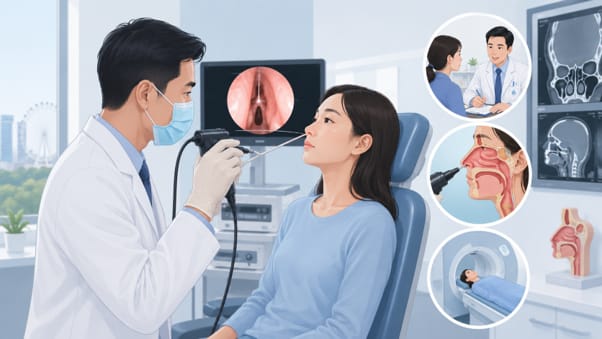
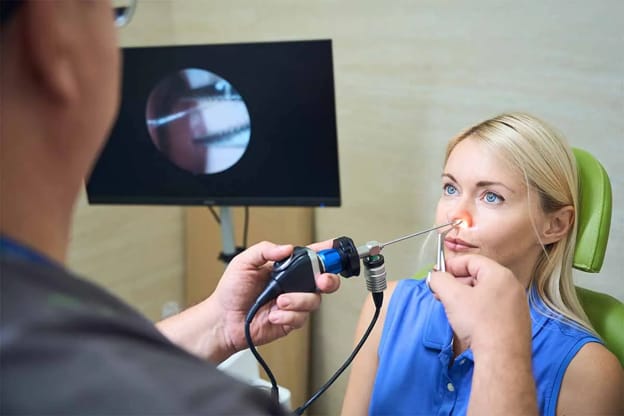
Certain problems affecting the nose and sinuses may develop in areas that are difficult to assess through a routine nasal examination. To investigate these regions more thoroughly, an ENT specialist may perform nasal endoscopy, a procedure that provides a magnified view of the internal nasal structures, sinus drainage pathways, and the space behind the nose, known as the nasopharynx.

During the examination, the specialist carefully guides a slender instrument, known as an endoscope, into the nasal passage. Depending on the patient’s symptoms and the areas requiring assessment, either a flexible or rigid endoscope may be used. 

Before the procedure, a nasal decongestant or local anaesthetic spray may be administered to minimise discomfort, reduce tissue swelling, and improve visibility.

By examining the nasal passages directly, the specialist can look for abnormalities that might otherwise remain undetected. These may include persistent inflammation, nasal polyps, excessive mucus, crusting, areas of bleeding, structural narrowing, or unusual tissue growths. 

The procedure also allows closer inspection of regions where the sinuses drain into the nose, helping the doctor investigate possible causes of recurring sinus infections, prolonged nasal congestion, unexplained discharge, or difficulty breathing through one nostril.

Although the idea of having an instrument inserted into the nose may seem uncomfortable, nasal endoscopy is generally well tolerated. Patients may notice a temporary feeling of pressure, mild irritation, watery eyes, or an urge to sneeze as the instrument moves through the nasal cavity. The examination typically takes only a few minutes and is usually performed during an outpatient consultation.

If an area of concern is identified, the ENT specialist may recommend additional investigations to determine its nature. In selected cases, a small tissue sample may be collected for laboratory examination through a procedure known as a biopsy. 

The findings from nasal endoscopy can help establish a more accurate diagnosis and guide further treatment according to the patient’s condition.

Flexible Laryngoscopy for the Throat and Voice Box

Flexible Laryngoscopy for the Throat and Voice Box

Persistent hoarseness, throat discomfort, swallowing difficulty, chronic cough or a lump sensation may be investigated with flexible laryngoscopy. A slim camera passes through the nose to view the throat, voice box and vocal cords.

The specialist may ask you to breathe, speak, make particular sounds or swallow. This shows how the vocal cords move and can reveal inflammation, weakness, nodules, polyps, reflux-related changes, or another lesion.

A numbing spray may be used. Most people tolerate the examination well, although it can cause brief gagging, coughing, or nasal discomfort. More detailed voice assessment may involve stroboscopy, which uses pulsed light to examine vocal-cord vibration.

Balance and Vestibular Testing

Dizziness does not always originate from an ear problem. Maintaining balance requires coordination between the inner ear, eyes, brain, and nervous system. Disruptions involving these structures, certain medications, or underlying medical conditions can cause spinning sensations, unsteadiness, or difficulty maintaining balance.

During an ENT consultation, the specialist may assess the patient’s symptoms, eye movements, coordination, and balance to identify possible causes. If dizziness occurs when changing head positions, a Dix-Hallpike test may be performed to investigate benign paroxysmal positional vertigo (BPPV), a condition associated with displaced calcium crystals within the inner ear’s balance canals.

The examination involves carefully positioning the patient’s head and body while observing for unusual eye movements, known as nystagmus, and any accompanying spinning sensations. These responses can help identify BPPV affecting the posterior semicircular canal. Additional positional assessments may be necessary if other balance canals are suspected.

For more complex or persistent symptoms, the ENT specialist may recommend videonystagmography (VNG), caloric testing, video head impulse testing (vHIT), or vestibular evoked myogenic potentials (VEMP). Each investigation evaluates different aspects of the balance system, helping the doctor determine the likely source of dizziness and recommend suitable treatment.

Smell and Taste Testing

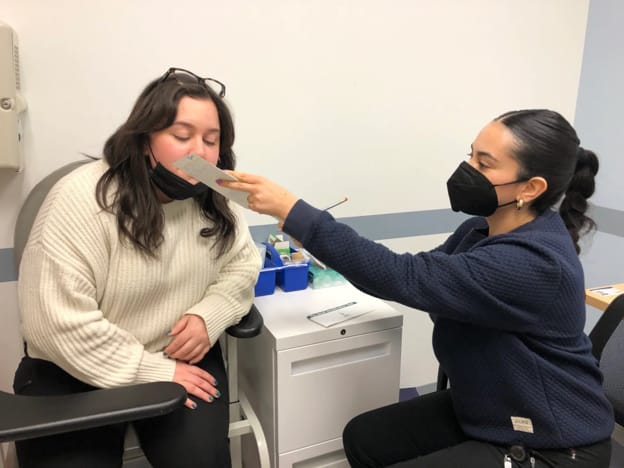
Reduced smell may follow infection, chronic sinus inflammation, nasal polyps, head injury or neurological disease. Standardised smell tests may ask you to identify or compare familiar odours.

Taste problems are less common than perceived loss of taste caused by reduced smell. A specialist may test sweet, salty, sour or bitter sensations when a genuine taste disorder is suspected.

Swallowing Assessments

Swallowing Assessments

Swallowing problems may be assessed in the clinic by observing mouth, tongue and throat movements. The specialist may watch you swallow liquids or foods of different textures.

A fibreoptic endoscopic evaluation of swallowing uses a flexible camera passed through the nose while you eat and drink small amounts. It shows whether material collects in the throat or enters the airway.

Another option is a videofluoroscopic swallow study, a moving X-ray performed while you swallow contrast material. This test examines the coordinated movement of food from the mouth through the throat and helps guide dietary or rehabilitation advice.

Allergy Tests, Cultures and Biopsies

Skin-prick or blood tests may be arranged when allergic rhinitis is suspected. Results must be interpreted alongside symptoms because a positive result does not always prove that an allergen is causing the current problem.

A swab or culture may be taken from persistent ear discharge or selected nasal infections, particularly when standard treatment has failed. Laboratory results can identify organisms and guide medication choices.

A biopsy removes a small tissue sample for microscopic examination. It may be recommended for an unexplained ulcer, neck lump, vocal-cord lesion, or nasal growth. Being offered a biopsy does not automatically mean cancer is present; it is a method of obtaining a definite diagnosis.

When Are CT, MRI or Ultrasound Scans Needed?

Imaging is not necessary for every ENT complaint. CT scanning provides detailed views of bone, sinuses, middle-ear spaces and certain neck structures. MRI gives more information about soft tissue, nerves and the brain.

Ultrasound is commonly used to assess thyroid nodules, salivary glands and neck lumps, and it may guide a needle biopsy. The specialist chooses imaging according to the suspected condition and avoids scans that are unlikely to change management.

How Should You Prepare for an ENT Assessment?

Bring a medication list, previous test results, and details of earlier treatment. Note when symptoms occur, what triggers them, and whether they affect one side.

Final Thoughts

An ENT specialist assessment may involve simple inspection, hearing tests, pressure measurements, endoscopy, balance testing, swallowing studies, laboratory analysis, or imaging. The exact combination depends on the problem being investigated.

These tests are not performed merely to collect information. Each one answers a specific clinical question, narrows possible causes, and helps the specialist recommend suitable treatment. Asking what a test is designed to show can make the process clearer and help you take an active role in decisions about your care.

…
Scroll to top